
What Happens After an Accident With an Uninsured Driver?
An accident with an uninsured driver can create two problems at once: the immediate stress of the crash and the financial uncertainty of who will pay for injuries, vehicle repairs, lost wages, and other losses.
The risk is real. NAIC reports that 15.4% of motorists, about one in seven drivers, were uninsured in 2023, with state rates ranging from 5.7% in Maine to 28.2% in Mississippi [1]. III reports the same national 15.4% uninsured-driver estimate from a 2025 Insurance Research Council study [2].
This guide explains what to do after the crash, which coverages may apply, what documentation matters, and how to review your policy afterward.
Understanding Uninsured Motorist Coverage
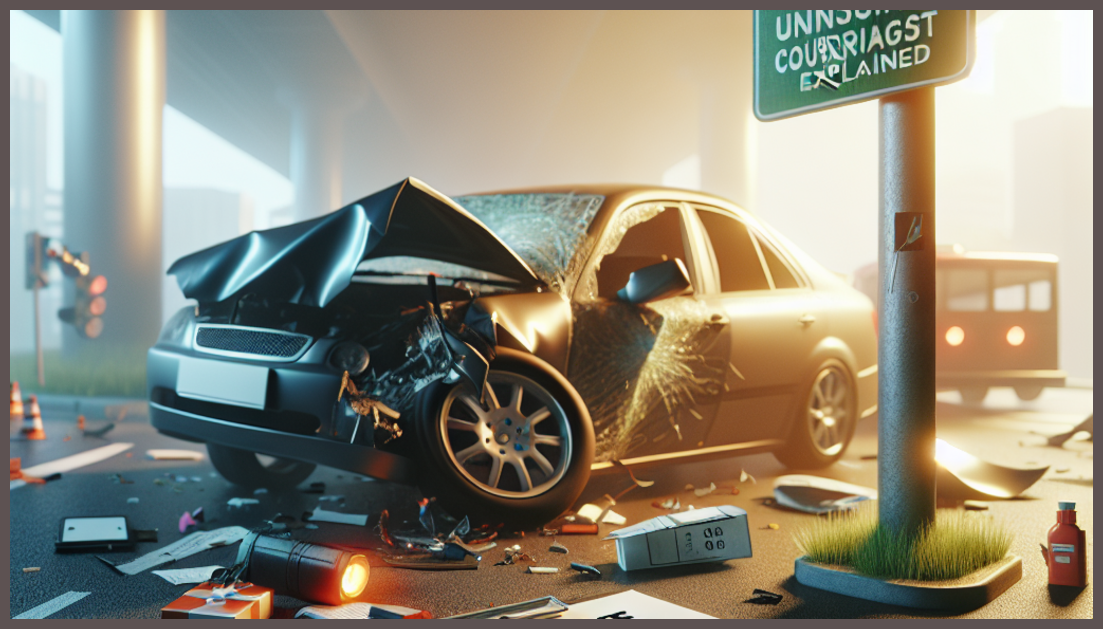
Uninsured motorist coverage is designed to protect you when the at-fault driver has no liability insurance. Instead of waiting for a nonexistent insurance policy to respond, you may file through your own insurer if your policy includes the right UM protection.
Coverage rules vary by state and insurer, but uninsured motorist protection is often split into different parts. These coverages can work together with collision, medical payments, personal injury protection, or health insurance depending on the claim.
Uninsured motorist bodily injury
May help pay covered medical bills, lost wages, and injury-related damages for you and covered passengers.
Uninsured motorist property damage
May help repair or replace your vehicle if an uninsured driver causes property damage and UMPD is available in your state.
Underinsured motorist coverage
May apply when the at-fault driver has insurance, but their limits are too low to cover the full loss.
Coverage rules vary by state and insurer, but uninsured motorist coverage can provide important protection when the at-fault driver has no insurance. Depending on the policy, it can work alongside collision, medical payments, personal injury protection, or health insurance.
The Financial Implications of Accidents With Uninsured Drivers
When the at-fault driver has no insurance, there is no liability carrier available to pay your claim. That can leave you depending on your own policy, savings, health insurance, collision coverage, or a lawsuit against the other driver. In many cases, collecting directly from an uninsured driver can be difficult because the person may not have enough income or assets.
III explains that uninsured motorist property damage coverage may be needed because uninsured motorist insurance may cover bodily injuries but not damage to your car or property [3]. That is why it is important to know whether your policy includes UMPD, collision, or both.
| Crash Cost | Without UM/UMPD | Coverage That May Help |
|---|---|---|
| Medical bills | You may rely on health insurance, savings, MedPay, PIP, or a lawsuit. | Uninsured motorist bodily injury, MedPay, PIP, or health insurance. |
| Lost wages | Income loss may not be fully covered by health insurance. | UM bodily injury, PIP, disability benefits, or other policy benefits where available. |
| Vehicle repairs | You may pay out of pocket if you do not carry collision or UMPD. | UMPD where available, or collision coverage subject to deductible. |
| Long-term recovery | Rehabilitation, follow-up care, or reduced work capacity can create financial pressure. | UM/UIM, health insurance, PIP, MedPay, and other applicable benefits. |
| Legal recovery | You may sue the driver, but collecting can be difficult. | UM/UIM can provide a more practical claim path through your own insurer. |
Step-by-Step Claim Process After the Accident
The first few steps after the crash can affect your claim. Even if the other driver admits they are uninsured, you still need documentation that proves what happened, who was involved, and what losses resulted from the accident.
Check safety first
Move to a safe place if possible, call emergency services, and get medical help for injuries.
Call the police
A police report can help document fault, driver identity, insurance status, and hit-and-run details.
Document the scene
Take photos, videos, witness details, vehicle information, license plates, and road conditions.
Notify your insurer
Report the crash quickly and explain that the other driver appears uninsured or underinsured.
Police reports, photos, medical records, repair estimates, and other documentation can become important during an uninsured motorist coverage claim, especially when the insurer needs to confirm fault, damages, and the other driver’s insurance status.
Quick Video: Estimating Car Insurance Costs
This video from the Insurance Videos YouTube channel provides a quick overview of estimating car insurance costs, which can be useful when reviewing coverage after an uninsured-driver accident.
Use the video as a quick overview, then compare your own UM, UIM, UMPD, collision, deductibles, and policy limits directly with your insurer.
The Importance of Documentation
Documentation is especially important when the other driver has no insurance. Your insurer needs to verify the accident, evaluate fault, confirm coverage, review damages, and calculate what your policy may pay.
Evidence from the scene
- Photos of vehicle damage, license plates, and road conditions.
- Police report or incident number.
- Names and contact details for witnesses.
- Other driver’s name, license number, and vehicle information.
- Any written statement from the other driver about insurance status.
Evidence after the scene
- Medical bills, records, and prescriptions.
- Repair estimates, towing bills, and rental receipts.
- Pay stubs or employer letters showing lost wages.
- Claim letters, adjuster emails, and policy documents.
- Updated declarations page showing UM/UIM limits.
Keep everything in one folder. A complete file helps reduce delays and makes it easier to answer the adjuster’s questions.
Which Coverages May Apply?
After an uninsured-driver accident, several parts of your policy may matter. The exact order and availability depend on your state, insurer, policy language, and the facts of the crash.
| Coverage | What It May Pay | Important Reminder |
|---|---|---|
| UM bodily injury | Medical bills, lost wages, and injury-related losses caused by an uninsured driver. | Limits can run out after a serious crash, especially with multiple injured passengers. |
| UM property damage | Vehicle or property damage caused by an uninsured driver where UMPD is available. | Availability, deductibles, and hit-and-run rules vary by state. |
| Collision coverage | Repairs to your vehicle after a covered collision, regardless of the other driver’s insurance status. | Usually has a deductible and may affect future pricing depending on insurer rules. |
| MedPay or PIP | Medical costs for you or passengers, depending on state and policy. | These coverages may apply regardless of fault, but limits are often separate. |
| Health insurance | Medical treatment, subject to deductibles, networks, and plan rules. | Health insurance usually does not replace lost wages or vehicle damage. |
An accident can expose limits or coverage gaps that were easy to overlook before the loss, making it a useful time to reassess your uninsured motorist coverage needs before the next renewal.
“An uninsured-driver crash is exactly when policy details matter most. The right limits, fast reporting, and strong documentation can make the difference between a manageable claim and a long financial struggle.”
Your Insurance Options Moving Forward
After the accident, review your entire auto policy, not only the claim. An uninsured-driver crash often reveals gaps that were easy to overlook before the loss happened.
Review your limits
Ask whether your UM/UIM limits are high enough for medical bills, lost wages, and passengers.
Check vehicle protection
Confirm whether collision or UMPD is available for your car repairs after an uninsured-driver crash.
Compare quotes
Different insurers price UM/UIM, collision, deductibles, and claim history differently.
An accident can expose limits or coverage gaps that were easy to overlook before the loss, making it a useful time to reassess your uninsured motorist coverage needs before the next renewal.
How to Reduce Financial Damage After the Crash
You cannot change the other driver’s lack of insurance after the accident, but you can make choices that reduce confusion and strengthen your recovery process.
Do this quickly
- Get medical attention and follow care instructions.
- Report the accident to police and your insurer.
- Ask your insurer which coverages may apply.
- Keep all receipts, invoices, and repair estimates.
- Track missed work and income loss.
Avoid these mistakes
- Leaving the scene without a report.
- Waiting too long to notify the insurer.
- Assuming the other driver will pay privately.
- Throwing away receipts or repair documents.
- Accepting a settlement without understanding your policy limits.
Medical bills, lost income, vehicle repairs, and other financial risks created by uninsured motorist coverage gaps can become much harder to manage when the at-fault driver has little or no ability to pay.
When to Add or Increase UM/UIM Coverage
A crash with an uninsured driver is a strong reminder to review coverage before the next accident. Even if you already carry UM or UIM, adjusting your uninsured motorist coverage limits may be worth considering when the current amount is too low for your income, household, or driving exposure.
| Policy Situation | Why It Matters | Next Step |
|---|---|---|
| No UM/UIM listed | You may have no first-party protection if the at-fault driver has no insurance. | Ask whether UM/UIM can be added mid-term or at renewal. |
| Very low UM/UIM limits | Low limits may run out quickly after serious injuries. | Compare minimum, matched liability, and higher limit options. |
| No UMPD or collision | Your car repairs may not be covered after an uninsured-driver crash. | Ask whether UMPD or collision coverage is available and affordable. |
| Long commute or new driver | More miles or more drivers can increase exposure. | Review limits, discounts, deductibles, and total policy cost. |
| Recent move | State rules and uninsured driver rates can vary significantly. | Verify new state requirements and available UM/UIM options. |
Drivers whose declarations page does not show UM/UIM may be able to add uninsured motorist coverage to an existing policy, although availability and timing depend on the insurer and state.
FAQ: Accidents With Uninsured Drivers
What should I do immediately after an accident with an uninsured driver?
Check for injuries, call emergency services if needed, call police, exchange information, take photos, collect witness contacts, and notify your insurer as soon as possible.
Will my uninsured motorist coverage pay automatically?
No. The claim must qualify under your policy. Your insurer will review fault, the other driver’s insurance status, your coverage limits, documentation, injuries, and damages.
What if I do not have uninsured motorist coverage?
You may need to rely on collision coverage, health insurance, MedPay, PIP, savings, or legal action against the at-fault driver. Collecting directly from an uninsured driver can be difficult.
Does uninsured motorist coverage apply to hit-and-run accidents?
It may, but rules vary by state and policy. You may need a police report, prompt reporting, and proof that the hit-and-run vehicle was involved.
Will a UM claim raise my premium?
Every insurer has its own rating rules, and state laws vary. Ask your insurer how not-at-fault UM claims are treated at renewal.
Can I sue the uninsured driver?
You may have legal options, but collecting money can be difficult if the driver has limited income or assets. Ask a qualified attorney in your state for case-specific guidance.
Conclusion
An accident with an uninsured driver can be financially stressful because the at-fault driver may have no insurance company available to pay your losses. The right response is to document the crash carefully, notify your insurer quickly, and understand which parts of your own policy may apply.
Uninsured motorist coverage, underinsured motorist coverage, UMPD, collision, MedPay, and PIP can all matter depending on your state and policy. After the claim, review your limits and compare options so your next policy gives you stronger protection before another uninsured-driver accident happens.
References
- National Association of Insurance Commissioners, Uninsured Motorists topic page, including 2023 uninsured motorist rate and state variation information. Source↩
- Insurance Information Institute, Facts and statistics on uninsured motorists, including 2023 uninsured driver rate information. Source↩
- Insurance Information Institute, Protect yourself against uninsured motorists, including UMPD explanation. Source↩
- National Association of Insurance Commissioners, Auto Insurance consumer information and coverage overview. Source↩
- Insurance Information Institute, Auto insurance basics and coverage explanations. Source↩