
Fred Loya itself says there is no policy that literally provides “full coverage.” In everyday shopping language, drivers often use the phrase for a policy that includes liability plus collision and comprehensive, but the real protection depends on the coverages, limits, deductibles, exclusions, and optional benefits shown on the policy.
Fred Loya’s FAQ says every policy still has limits, deductibles, and exclusions [1]. Its current coverage page separately lists liability, medical coverage, uninsured motorist coverage, collision, comprehensive, roadside assistance, and rental reimbursement [2]. That is why the phrase “full coverage” should never substitute for checking the actual quote.
What “Full Coverage” Really Means
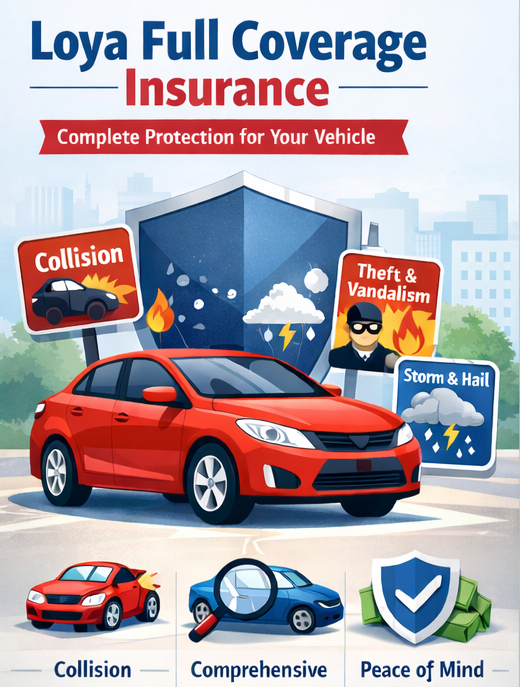
Fred Loya’s own FAQ is unusually clear on this point: “full coverage” is a widely used phrase, not a policy that covers every possible loss [1]. For practical comparison, the phrase usually signals that collision and comprehensive have been added to liability, but the declarations page controls.
A policy can still have exclusions, coverage limits, separate deductibles, excluded drivers, state-specific medical or UM rules, and optional services that are not included automatically. Treat “full coverage” as a starting label, not a coverage guarantee.
Liability
Addresses covered bodily injury or property-damage claims you cause to other people, up to the policy limits.
Collision
Pays for covered damage to your own vehicle after a collision with another vehicle or object, subject to the policy and deductible.
Comprehensive
Pays for covered non-collision vehicle losses such as theft, fire, hail, flood, vandalism, or other listed causes, subject to the policy and deductible.
Which Fred Loya Coverages Can Appear on the Policy
Fred Loya’s current coverage page lists liability; medical options such as PIP or Medical Payments depending on the state; uninsured motorist coverage; vehicle coverage through collision and comprehensive; and additional options such as roadside assistance and rental reimbursement [2]. The quote determines which of those protections you actually purchase.
| Coverage | What it generally does | Why it matters |
|---|---|---|
| Liability | Helps pay others for injuries or property damage you cause in a covered accident. | Required in most states and forms the legal foundation of the policy. |
| Collision | Helps repair your vehicle after a covered crash, usually subject to a deductible. | Important if you cannot afford repair or replacement after an accident. |
| Comprehensive | Helps with covered non-collision events such as theft, hail, fire, vandalism, flood or animal damage. | Important for weather, theft, glass and other non-crash risks. |
| Medical coverage | PIP or Medical Payments may be available depending on the state and can address covered injury expenses. | Do not assume the medical option is included automatically; verify the state and quote. |
| Uninsured motorist coverage | Can address covered losses caused by an uninsured at-fault driver; availability and requirements vary by state. | Check whether UM/UIM is included, offered separately, required, or rejectable where the policy is written. |
| Rental reimbursement | Can pay for a rental vehicle after a covered accident when the insured vehicle is unavailable, subject to the option’s terms. | Fred Loya lists it as an additional coverage option, not as an automatic consequence of the “full coverage” label. |
| Roadside assistance | Can cover specified roadside services such as towing, fuel delivery, and flat-tire assistance. | Verify that the option is actually selected before relying on it. |
Financed or Leased Vehicles: Check the Lienholder Requirements
Fred Loya’s FAQ says the lienholder on a financed vehicle requires physical-damage coverage and describes that protection as covering the insured vehicle against collision and non-collision losses, subject to the deductible [3]. Your loan or lease agreement controls the exact coverage and deductible requirements.
Do not remove collision or comprehensive from a financed or leased vehicle simply because the premium is high. Confirm the lender or lessor requirements first, then compare policy options that satisfy them.
Full coverage is usually important if:
- Your vehicle is financed.
- Your vehicle is leased.
- Your lender requires specific deductibles.
- Your car is newer or high-value.
- You cannot replace the car out of pocket.
- You depend on the car for work or family needs.
Do not assume it is optional if:
- You still owe money on the vehicle.
- Your lease agreement requires physical damage coverage.
- Your lender requires collision and comprehensive.
- You recently changed vehicles.
- You refinanced the car loan.
- You changed insurers during the loan term.
Full Coverage Does Not Cover Everything
The phrase does not override the contract. Limits, deductibles, exclusions, covered drivers, vehicle use, and optional endorsements still determine whether a particular loss is covered.
Exclusions still apply
A policy can exclude particular drivers, uses, causes of loss, or property even when collision and comprehensive are present.
Optional benefits stay optional
Rental, roadside, medical, UM/UIM, and other benefits should be confirmed individually rather than assumed from the label.
Loan balance is a separate issue
Collision and comprehensive insure covered vehicle damage; do not assume the policy automatically pays any amount you owe above the vehicle’s covered value.
How Deductibles Affect Loya Full Coverage
Deductibles are central to full coverage. A deductible is the amount you pay before insurance contributes to a covered claim. Collision and comprehensive claims usually have deductibles, while liability claims generally do not use a deductible in the same way.
NAIC’s quote-comparison guidance encourages consumers to compare the same coverage and deductible choices when reviewing prices [4]. A higher deductible may lower the premium, but it can also create a larger out-of-pocket cost after a covered claim.
| Deductible choice | Premium effect | Claim-time effect |
|---|---|---|
| Lower deductible | Usually higher premium. | Less money due out of pocket after a covered claim. |
| Higher deductible | Usually lower premium. | The deductible shown on a Loya policy is the amount you should be prepared to pay after a covered physical-damage loss. |
| Lender-approved deductible | May be required for financed or leased vehicles. | Helps avoid lender problems or forced coverage. |
Why Two Loya Full-Coverage Quotes Can Cost Different Amounts
The price depends on more than the presence of collision and comprehensive. Driver information, vehicle, territory, prior insurance, selected limits, deductibles, optional coverages, and discounts can all change the final quote.
NAIC consumer guidance identifies factors such as driving record, territory, prior insurance, vehicle use, vehicle type, selected coverage, and deductibles as items that can affect auto-insurance pricing [5].
Driver factors
Tickets, accidents, DUIs, claim history, age, experience and prior insurance can affect eligibility and pricing.
Vehicle factors
Vehicle value, repair costs, safety features, theft risk and lender requirements can change the premium.
Policy factors
Coverage limits, deductibles, rental, roadside, medical payments, UM/UIM and discounts can affect total cost.
Five-Question Full Coverage Decision Checklist
These questions help separate a useful broader policy from one that simply carries the “full coverage” label.
When Collision and Comprehensive Are Worth Reviewing
Physical-damage coverage is most important when losing the vehicle would create a financial problem, when the lender requires it, or when the vehicle still has enough value that you would rather transfer the repair or replacement risk to the insurer.
| Driver or vehicle situation | Why full coverage may help | What to review |
|---|---|---|
| Financed car | Lender may require collision and comprehensive. | Required limits, deductibles, lienholder information and gap exposure. |
| Leased car | Lease agreements usually require physical damage coverage. | Lease contract requirements and maximum deductible allowed. |
| Newer vehicle | Repair and replacement costs may be high. | Vehicle value, deductible and whether gap coverage is needed. |
| Daily commuter | A vehicle loss can disrupt work, school or family responsibilities. | Rental reimbursement, roadside assistance and repair timelines. |
| Weather or theft exposure | Comprehensive can help with theft, hail, fire, flood, vandalism, glass and animal damage. | Comprehensive deductible and exclusions. |
| Older paid-off car | Full coverage may or may not be worth the cost. | Vehicle value, annual premium, savings and replacement ability. |
When a Paid-Off Vehicle May Need a New Coverage Review
Once the lender no longer requires physical-damage coverage, the decision can change as the vehicle ages. Compare the cost of collision and comprehensive with the vehicle’s current value, deductible, and the amount you could afford to replace yourself.
There is no single vehicle age or value at which collision and comprehensive should automatically be dropped. Review the tradeoff at renewal and keep the coverage when an uninsured repair or total-loss expense would still be difficult to absorb.
Keeping full coverage may make sense if:
- The car is financed or leased.
- The car still has meaningful market value.
- You cannot replace the car with savings.
- You rely on the vehicle every day.
- You live in an area with theft, hail, flood, fire or vandalism risk.
Reconsidering may make sense if:
- The car is older and paid off.
- The annual premium is high compared with the car’s value.
- You can afford replacement or repairs yourself.
- Your deductible is close to the car’s value.
- You only need legal liability coverage.
Full Coverage vs. Liability-Only: The Practical Difference
Liability and physical-damage coverage solve different problems. Liability addresses covered claims you cause to other people; collision and comprehensive address covered damage to your own vehicle.
| Policy type | Usually includes | Best fit |
|---|---|---|
| Liability-only | Bodily injury liability and property damage liability. | Drivers with older paid-off cars who mainly need legal coverage and can handle their own repair risk. |
| Full coverage | Liability plus collision and comprehensive, with optional add-ons depending on the policy. | Drivers with financed, leased, newer or important vehicles they cannot easily repair or replace. |
How to Build a Broader Loya Policy Without Guessing
Build the quote from the actual risks and requirements rather than from the label “full coverage.” Confirm the lender rules, choose deductibles you could pay, and add optional protections only when they solve a problem you want insured.
Confirm lender rules
Check whether your loan or lease requires collision, comprehensive or maximum deductibles.
Compare deductibles
Ask how the premium changes with each deductible and choose one you can actually pay.
Review add-ons
Consider rental, roadside, medical payments, UM/UIM and gap coverage if they fit your situation.
Recheck annually
Compare the premium against your car’s updated value and your ability to replace it.
Common Mistakes to Avoid
Most mistakes come from assuming the label says more than the policy documents do. A driver can overpay for options that are not useful or underinsure the vehicle by choosing a cheaper structure without noticing what changed.
Risky mistakes
- Assuming “full coverage” means every possible loss is covered.
- Choosing a deductible you cannot afford after a claim.
- Dropping collision or comprehensive on a financed vehicle.
- Ignoring lender or lease requirements.
- Not asking about rental or roadside needs.
- Forgetting to review UM/UIM coverage.
- Keeping full coverage forever without checking vehicle value.
Better habits
- Read your declarations page at each renewal.
- Compare liability-only and full coverage quotes.
- Ask about several deductible options.
- Confirm what your lender requires.
- Check whether gap coverage is needed.
- Review optional add-ons before rejecting them.
- Keep proof of coverage and lienholder updates.
FAQ: Loya Full Coverage Insurance
What does Loya full coverage insurance include?
Fred Loya says no policy literally provides “full coverage.” In common shopping language, drivers often mean liability plus collision and comprehensive. Medical coverage, UM/UIM, rental reimbursement, roadside assistance, and other options should be verified separately on the quote.
Is full coverage required for financed cars?
A lienholder or lessor can require physical-damage coverage on a financed or leased vehicle. Fred Loya’s FAQ describes lienholder-required physical damage as protection for the vehicle that includes collision and non-collision losses. Check the loan or lease agreement for the exact requirements.
Does full coverage pay for mechanical problems?
Do not assume the “full coverage” label pays every type of loss. Fred Loya says every policy still has limits, deductibles, and exclusions. Review the policy wording for the specific cause of loss rather than relying on the label.
Does full coverage include rental reimbursement?
Not automatically. Fred Loya lists rental reimbursement as an additional coverage option. Confirm whether it is selected on your quote and what limits or conditions apply.
Should I keep full coverage on an older car?
There is no universal cutoff. Once the vehicle is paid off, compare its current value, collision and comprehensive premium, deductibles, savings, and whether you could repair or replace the vehicle yourself.
How can I lower the cost of full coverage?
Compare equivalent quotes, check several deductible options, verify available discounts, and review optional coverages individually. Do not lower the premium by removing protection without understanding the additional loss you would keep.
Key Takeaways
For Fred Loya shoppers, “full coverage” is best understood as shorthand for a broader policy—not a promise that every possible loss is insured. The actual combination of liability, collision, comprehensive, medical, UM/UIM, rental, roadside, limits, and deductibles determines the protection.
The price comparison is most useful when Loya quotes use the same limits and deductibles. That makes it easier to tell whether a lower premium reflects insurer pricing or simply a different coverage structure.
References
- Fred Loya Insurance, What is full coverage?, stating that no policy literally provides “full coverage” and that every policy still has limits, deductibles, and exclusions. Source↩
- Fred Loya Insurance, Car Insurance Coverage, including liability, medical coverage, uninsured motorist coverage, collision, comprehensive, roadside assistance, rental reimbursement, limits, and lienholder considerations. Source↩
- Fred Loya Insurance, Car Insurance Frequently Asked Questions, including the lienholder physical-damage requirement and Fred Loya's full-coverage explanation. Source↩
- National Association of Insurance Commissioners, A Shopping Tool for Automobile Insurance, including guidance to compare the same or similar coverages and matching deductibles. Source↩
- National Association of Insurance Commissioners, Auto Insurance consumer information, including common underwriting and rating factors such as driving record, territory, prior insurance, vehicle use, vehicle type, coverage, and deductibles. Source↩