Loya Insurance Claims

Best Rates from Us & Our Partners!*

Last updated on December 9, 2025

Steps to File a Claim With Loya Insurance

Jane Taylor
Author
Jane Taylor
— insurance for young drivers

Jane Taylor is a licensed insurance agent with over a decade of experience helping individuals and families find affordable and reliable coverage. She specializes in auto, home, and renters insurance, with a focus on simplifying complex policies and making insurance easy to understand. Jane is passionate about empowering clients to make informed decisions that protect what matters most.
Based in California, she writes regularly for leading insurance blogs, where she shares tips on saving money, understanding state requirements, and choosing the right coverage. When she’s not working with clients or writing, Jane enjoys gardening and volunteering at her local animal shelter.

For many drivers, the true test of an auto insurance company comes when they need to file a claim. Low premiums and easy payments are great, but when an accident happens, you need quick responses, clear instructions, and a company that handles the situation professionally. Loya Insurance, known for offering some of the lowest national rates, operates a claims system that is functional but often less digital and less automated than major national insurers.
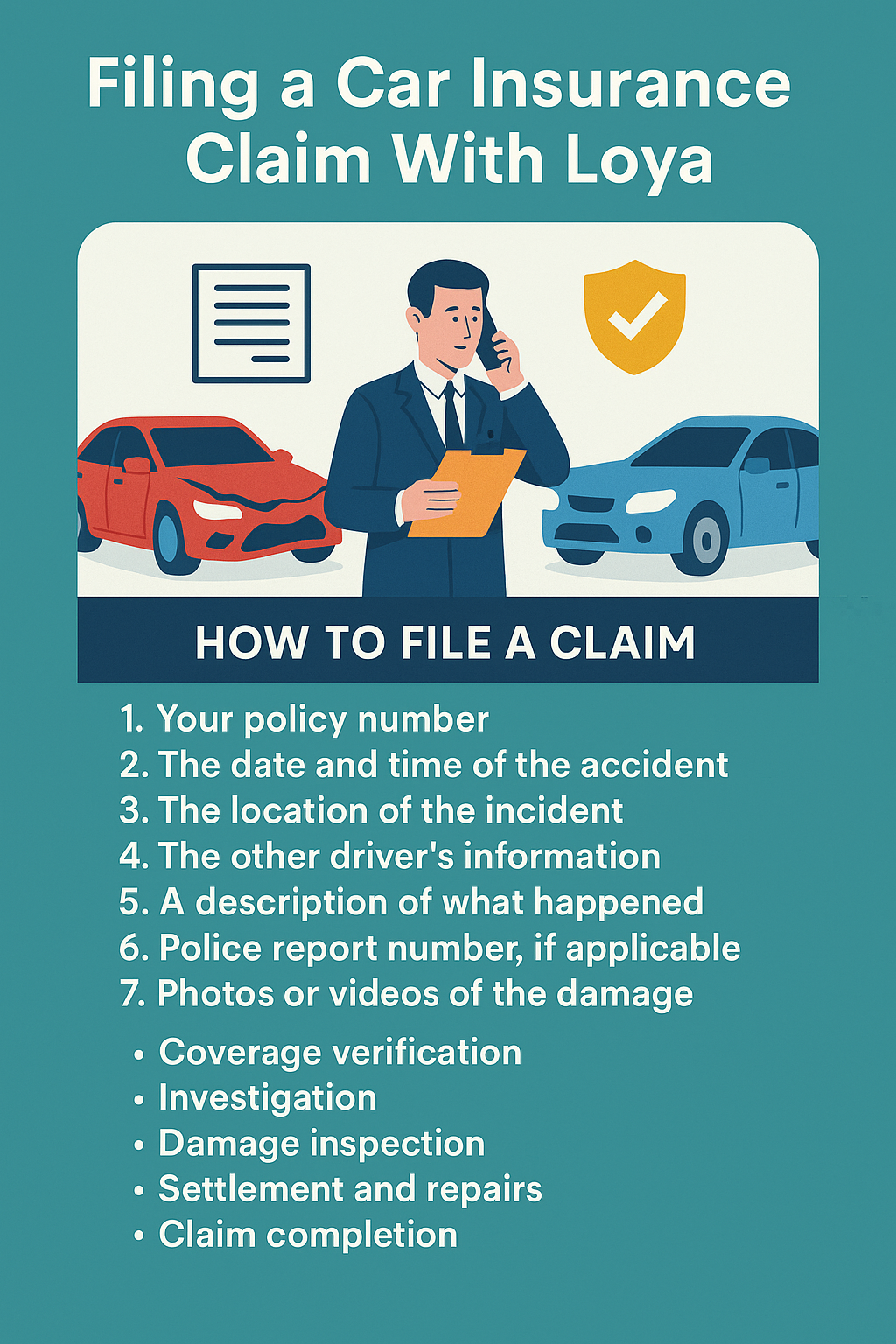
Filing a car insurance claim with Loya Insurance infographic showing an adjuster, two damaged cars, and a checklist of claim details and steps.

Because Loya serves a large number of high-risk drivers and customers seeking minimum liability coverage, their claims department handles a wide variety of situations, from minor fender-benders to complex SR-22 cases. Understanding what to expect during the claims process, how to communicate effectively with adjusters, how to avoid delays, and how to document everything properly can make a dramatic difference in your experience.

This article provides a complete guide to how Loya Insurance claims work, including filing procedures, timelines, common customer challenges, and expert strategies to ensure your claim moves as quickly and smoothly as possible. If you’re also trying to understand how insurers weigh risk before and after an accident, see how your driving record can affect your insurance rates.

How to File a Claim With Loya Insurance

Loya Insurance allows customers to file claims through several methods, depending on where they live and the type of incident involved. The most common methods include:

  • Calling the Loya claims phone number
  • Visiting a local Loya office for assistance
  • Contacting your agent (varies by state)
  • Submitting initial information through their website or portal

Most customers choose to call directly because that option connects them with the claims department and initiates the process immediately. When filing a claim, be prepared to provide:

  1. Your policy number
  2. The date and time of the accident
  3. The location of the incident
  4. The other driver’s information
  5. A description of what happened
  6. Police report number, if applicable
  7. Photos or videos of the damage

Providing detailed and accurate information during the first call helps prevent delays later.

What Happens After You File a Claim

After you report the claim, Loya assigns the case to a claims adjuster. This person becomes your main contact throughout the process. The adjuster will investigate the accident, review your coverage, communicate with other parties, and determine what the insurance company will pay.

The process generally includes the following steps:

  1. Coverage verification Loya must verify that your policy was active at the time of the accident, that payments were up to date, and that the type of claim falls under your coverage. For example, liability-only insurance will not cover your own car’s repairs.
  2. Investigation The adjuster gathers details from all sides, including statements from you, the other driver, witnesses, and sometimes law enforcement.
  3. Damage inspection Loya may send an adjuster to inspect your vehicle, request photos, or direct you to an approved repair shop for an estimate.
  4. Settlement and repairs Once the fault is determined and coverage confirmed, Loya offers a settlement or authorizes repairs based on the actual cash value of the vehicle and the cost estimates.
  5. Claim completion Once all documentation, payments, and agreements are finalized, the claim is officially closed.

Understanding these stages helps you stay prepared throughout the process. If you’re new to buying coverage and want a simple breakdown of what to shop for (before you ever need to file a claim), check this guide to auto insurance for first-time buyers.

loya insurance claims

What Loya Insurance Covers in a Claim

Coverage depends entirely on your policy type. Loya offers liability, full coverage, SR-22 policies, and sometimes optional add-ons. Here’s what each typically covers:

  • If you have liability-only
    • Loya pays for damage to the other driver’s car
    • Loya pays for the other driver’s medical bills
    • Loya pays for property damage (fences, light poles, buildings, etc.)
    • Loya does not pay for your car repairs
    • Loya does not cover your injuries unless you have added medical coverage
  • “`

  • If you have full coverage
    • Loya pays for your own vehicle’s collision damage
    • Loya pays for theft, vandalism, fire, hail, and non-collision damage
    • Loya pays up to policy limits for the other driver’s damages
  • If you have an SR-22
    • Loya handles filings with the DMV
    • Coverage rules remain the same based on the policy you purchased
  • “`

Drivers need to understand exactly what type of coverage they have before filing a claim. Confusion about coverage is one of the biggest sources of customer frustration.

How Long Loya Claims Typically Take

Claim timelines vary widely based on the type of claim, the availability of documents, and how quickly the policyholder responds. A simple claim may resolve in a week, while more complex cases can take several weeks or longer.

The biggest factors affecting timelines include:

  • How fast you submit photos, reports, and documents
  • Whether liability is clear or disputed
  • Whether both drivers have active coverage
  • How quickly other drivers respond
  • Whether police reports are available
  • Damage complexity and repair shop availability

Because Loya’s claims team is smaller and more manual than large insurers, proactive communication is essential.

Common Complaints About Loya Insurance Claims

Customers often report the same types of issues when dealing with Loya claims. Understanding these ahead of time helps you avoid them.

  • Communication delays — Some customers experience slow response times from adjusters. This is common with budget insurers that operate smaller claims teams.
  • Documentation requests — Loya may request additional documents during the process, such as photos, estimates, or police reports. Failing to provide these quickly leads to delays.
  • Disputes over fault — If the other driver disagrees with your version of events, the investigation can take longer.
  • Valuation disagreements — Customers with older cars sometimes disagree with the actual cash value provided by Loya during a total loss.
  • Lack of online claim tools — Loya does not offer the advanced digital claims systems that major insurers do, so much of the process is done through phone and email.

How to Speed Up a Loya Insurance Claim

You can dramatically improve the speed of your claim simply by following several key steps.

  1. Submit all documents on day one Provide photos, police reports, and written statements as quickly as possible.
  2. Respond immediately to adjuster requests Delays almost always occur when customers take days to respond.
  3. Call early in the morning Phone lines are much less busy before noon.
  4. Keep a claims notebook Write down:
    1. The adjuster’s name
    2. Every phone call time
    3. Confirmation numbers
    4. Notes from conversations
  5. Use direct phone numbers If your adjuster gives you a direct extension, use it rather than calling the main line.
  6. Request repair shop communication If your vehicle is at a partner repair shop, permit them to communicate directly with Loya.
  7. Stay polite and organized Firm but respectful communication always gets better results.

This protects you from miscommunication.

What to Do if Loya Denies Your Claim

If Loya denies your claim, the first step is to request the denial letter in writing. The letter will explain the specific policy exclusion or reason for denial.

Common reasons claims are denied include:

  • The policy was not active
  • Payment was late
  • The driver excluded from the policy was behind the wheel
  • Coverage type did not apply
  • The vehicle was being used for business or delivery
  • The damage was pre-existing
  • The accident was fraudulent or misrepresented

If you believe the denial is incorrect, you can request:

  • A claim reconsideration
  • A supervisor review
  • A corrected statement of facts
  • A re-inspection of the vehicle

Staying factual, calm, and organized increases your chances of success. Also, if your premium changed after a claim or ticket and you want flexible options, you may like Loya’s pay-as-you-go insurance setup, which can be easier to budget in certain situations.

What Happens When Another Driver Files a Claim Against You

If someone else files a claim against your Loya policy, Loya assigns an adjuster to represent you. You must cooperate by providing photos, statements, and any evidence that supports your version of the accident.

If you do not respond, Loya may be forced to settle based on the other driver’s account, which may not favor you. If you drive occasionally or don’t own a car but still need liability protection (or proof of insurance), learn how non-owner car insurance works with Loya.

The Final Word On Loya Insurance Claims

Loya Insurance claims are straightforward when customers understand the process and communicate proactively. While Loya may not offer the sophisticated digital claims experience of larger insurers, their claims system functions efficiently when policyholders submit documents quickly, respond promptly, and maintain consistent follow-up.

By keeping detailed records, staying in close contact with your adjuster, and understanding your exact coverage limits, you can ensure that your claim moves through the system smoothly and without unnecessary delays. Compare online quotes today and see how fast you can save hundreds on your next auto insurance policy.