
Loya Auto Insurance Non-Owner Coverage
Loya auto insurance non-owner coverage is a topic many drivers research when they need liability insurance but do not own a vehicle. A non-owner policy may help drivers who borrow cars, rent vehicles, need continuous coverage, or need an SR-22 filing without insuring a specific car.
Non-owner car insurance generally provides liability coverage for drivers who do not own a car but occasionally drive vehicles not registered in their name. Allstate explains that this type of policy can cover damages or injuries you cause to others, and it may include protections such as uninsured motorist coverage or medical payments depending on the insurer and state [1].
Before buying, compare Loya SR-22 insurance, review cheap SR-22 insurance from Loya Insurance Company, and learn how to get a Loya car insurance quote.
What Is Non-Owner Auto Insurance?
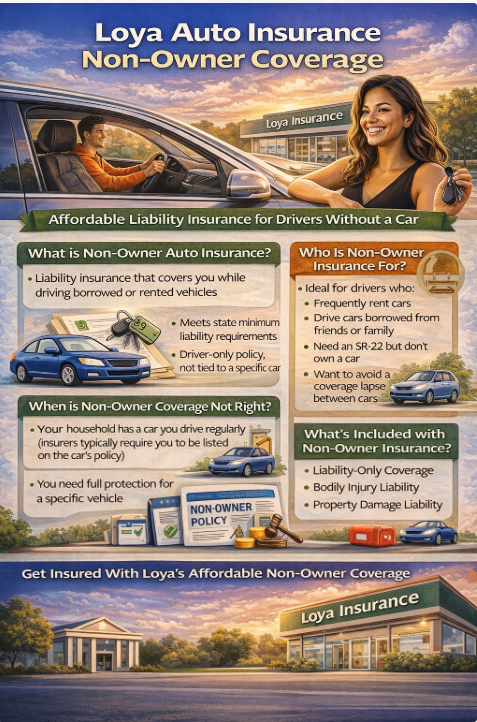
Non-owner auto insurance is usually a liability-only policy for a driver who does not own a car. Instead of insuring a specific vehicle, the policy follows the driver when they occasionally operate a borrowed or rented vehicle, subject to policy terms.
This type of coverage typically helps pay for bodily injury or property damage you cause to other people in an at-fault accident. It usually does not include collision or comprehensive coverage because there is no specific vehicle listed on the policy.
Liability coverage
May help pay for injuries or property damage you cause to others while driving a vehicle you do not own.
Secondary protection
In many cases, the vehicle owner’s policy is primary, and non-owner coverage may apply after that policy’s limits.
No vehicle damage coverage
It generally does not pay to repair the borrowed or rented car you were driving.
How Loya Non-Owner Coverage May Work
Drivers often look at Loya because Fred Loya Insurance focuses on affordable auto insurance and says its agents can help with SR-22 certificates or customized auto insurance policies [2]. However, availability of non-owner coverage can vary, so the safest step is to ask Loya directly whether a non-owner policy is available in your state.
If available, a non-owner policy would usually be structured around liability coverage rather than a specific car. It may help you satisfy legal or state filing requirements without paying to insure a vehicle you do not own.
Good fit
You do not own a vehicle, do not regularly use a household car, and only need occasional-driver liability protection.
Bad fit
You own a vehicle, drive one car regularly, or want coverage for damage to the car itself.
What Non-Owner Coverage Usually Includes and Excludes
Non-owner coverage is not full coverage. Forbes Advisor reports that the average cost of basic liability car insurance is $703 per year in its 2026 analysis, while full coverage averages $2,434 per year [3]. Non-owner policies can be cheaper than standard owner policies because they usually avoid vehicle-specific collision and comprehensive coverage.
| Coverage area | Usually included? | Important note |
|---|---|---|
| Bodily injury liability | Often yes | May help pay injuries you cause to others in a covered accident. |
| Property damage liability | Often yes | May help pay damage you cause to another vehicle or property. |
| SR-22 filing | Sometimes available | Ask whether the insurer can file it with your state. |
| Uninsured motorist or MedPay | Varies | Availability depends on insurer, state, and policy terms. |
| Collision | Usually no | Does not normally repair the car you are driving. |
| Comprehensive | Usually no | Does not normally cover theft, vandalism, hail, flood, or fire damage to the car. |
| Personal vehicle coverage | No | If you buy a car, you need a standard owner policy. |
For more coverage basics, review Loya liability car insurance and types of auto insurance coverage explained.
Non-Owner Coverage and SR-22 Requirements
One of the most common reasons drivers ask about non-owner insurance is an SR-22 requirement. An SR-22 is not a separate insurance policy; it is a certificate filed by an insurer to show that you carry the required liability insurance.
Texas DPS states that an SR-22 certifies that you have minimum liability insurance, and that the insurance provider automatically notifies the department if the SR-22 is canceled, terminated, or lapses [4]. Texas DPS also says that if you do not own a vehicle but must file and maintain an SR-22, you may obtain a Texas non-owner SR-22 insurance policy [5].
Non-owner SR-22
May help drivers meet a filing requirement when they do not own a vehicle.
Continuous coverage
A lapse can create license, reinstatement, or filing problems depending on state rules.
Lower-cost path
It may cost less than insuring a vehicle you do not own, but eligibility must be confirmed.
Who Should Not Use Non-Owner Insurance?
Non-owner insurance is narrow coverage. It can be useful, but it should not be used to avoid properly insuring a car you own or regularly drive. If you misrepresent vehicle access, a claim may be denied or the policy may be canceled.
| Situation | Why non-owner coverage may not work | Better option |
|---|---|---|
| You own a car | Non-owner coverage is not designed for vehicles registered to you. | Buy a standard auto insurance policy. |
| You regularly use a household car | Insurers usually expect regular drivers to be listed on the household policy. | Ask to be added as a driver on that policy. |
| You drive the same borrowed car daily | Regular access may make you ineligible for non-owner coverage. | Discuss listed-driver or owner-policy options. |
| You want vehicle damage protection | Non-owner insurance usually does not include collision or comprehensive. | Use the owner’s policy, rental coverage, or a standard policy if you own the car. |
| You use a vehicle for business | Personal non-owner policies may exclude business or commercial use. | Ask about commercial or business-use coverage. |
How to Qualify for Non-Owner Insurance
Eligibility rules vary by insurer and state, but non-owner insurance generally requires that you do not own a car and do not have regular access to a vehicle in your household. You may also need a valid driver’s license or be eligible for reinstatement if an SR-22 is involved.
Confirm you do not own a car
The policy is meant for drivers without a vehicle registered in their name.
Explain vehicle access
Be honest about borrowed cars, household vehicles, rentals, and how often you drive.
Ask about SR-22 filing
If required, confirm the insurer can file the SR-22 with your state before buying.
Get documents in writing
Save the declarations page, ID cards, SR-22 filing proof if applicable, and payment receipt.
Cost Advantages and Limits
Non-owner insurance is often cheaper than a standard auto policy because it generally does not insure a specific vehicle for physical damage. However, the final price can still vary based on your state, driving record, age, prior insurance history, liability limits, and whether an SR-22 filing is required.
Drivers should compare the total policy cost, not only the first payment. A policy with a low down payment can still have installment fees, filing fees, or higher monthly payments.
Why it can cost less
- No vehicle listed for collision or comprehensive coverage.
- Usually liability-focused protection.
- Often used by occasional drivers.
- May help avoid a lapse without insuring a car.
Why it may still cost more
- SR-22 requirement.
- Recent violations or accidents.
- Coverage lapse history.
- Higher liability limits.
- State filing or policy fees.
Non-Owner vs. Standard Auto Insurance
NAIC explains that auto insurance can be divided into liability and property damage coverage areas, and that underwriting and rating help determine what you pay [6]. The key difference is that standard auto insurance is built around a specific vehicle, while non-owner coverage is built around a driver who does not own a vehicle.
| Policy type | Best for | Usually covers | Usually does not cover |
|---|---|---|---|
| Non-owner insurance | Drivers without a car who occasionally borrow or rent vehicles. | Liability you cause to others, subject to policy terms. | Damage to the vehicle you are driving. |
| Standard liability policy | Drivers who own a vehicle and need minimum legal coverage. | Injury or property damage you cause to others. | Your own car’s damage unless additional coverage is added. |
| Full coverage policy | Owners of financed, leased, newer, or valuable vehicles. | Liability plus collision and comprehensive, depending on policy. | Exclusions, wear and tear, and limits listed in the policy. |
When to Switch From Non-Owner to Owner Coverage
Once you buy a car or start regularly using a specific vehicle, non-owner insurance may no longer fit. At that point, you should switch to a standard auto insurance policy that lists the vehicle, drivers, coverage limits, deductibles, and any lender requirements.
You buy a vehicle
Switch to a standard policy before driving the car regularly.
You move into a household with a car
Ask whether you need to be listed on the household policy.
You finance or lease a car
Your lender will usually require collision and comprehensive coverage.
FAQ: Loya Auto Insurance Non-Owner Coverage
Does Loya offer non-owner auto insurance?
Availability can vary by state and office. Fred Loya states that its agents can help with SR-22 certificates and customized auto insurance policies, but you should ask Loya directly whether non-owner coverage is available for your situation.
What does non-owner insurance cover?
It usually provides liability coverage for injuries or property damage you cause to others while driving a car you do not own. It usually does not cover damage to the car you are driving.
Can I get non-owner insurance if I need an SR-22?
Often yes, depending on your state and insurer. Texas DPS states that if you do not own a vehicle but must file and maintain an SR-22, you may obtain a Texas non-owner SR-22 policy.
Is non-owner insurance cheaper than regular auto insurance?
It is often cheaper because it usually does not include collision or comprehensive coverage for a specific car. However, SR-22 requirements, violations, and state rules can increase the cost.
Can I use non-owner insurance if I borrow a family member’s car every day?
Usually no. If you regularly use a household vehicle, insurers generally expect you to be listed on that vehicle’s policy instead of using non-owner insurance.
Does non-owner insurance cover rental cars?
It may provide liability protection when you rent a car, subject to policy terms. It usually does not cover physical damage to the rental car unless another coverage or rental agreement applies.
Final Thoughts on Loya Auto Insurance Non-Owner Coverage
Loya auto insurance non-owner coverage may be worth asking about if you do not own a vehicle but still need liability insurance, continuous coverage, or an SR-22 filing. The key is to confirm availability, eligibility, limits, filing support, and exclusions before buying.
Non-owner coverage can be a practical low-cost option for occasional drivers, renters, borrowers, and drivers between vehicles. But if you own a car, regularly use a household vehicle, or need protection for vehicle damage, a standard auto policy is usually the better fit.
References
- Allstate, What is Non-Owner Car Insurance?, including general non-owner liability coverage, occasional-use, and possible add-on coverage context. Source↩
- Fred Loya Insurance, SR-22 Insurance: Process, Cost, Validity & Who Needs It, including Fred Loya’s statement that agents can help with SR-22 certificates and customized auto insurance policies. Source↩
- Forbes Advisor, Average Cost of Car Insurance 2026, including average annual full coverage and basic liability cost estimates. Source↩
- Texas Department of Public Safety, Financial Responsibility Insurance Certificate (SR-22), including SR-22 definition and lapse notification information. Source↩
- Texas Department of Public Safety, SR-22 FAQ, including non-owner SR-22 insurance policy information for drivers who do not own a vehicle. Source↩
- National Association of Insurance Commissioners, Auto Insurance consumer information, including liability, property damage, underwriting, and rating context. Source↩