Loya Insurance Deductibles
Best Rates from Us & Our Partners!*

Call us 855-620-9443
Best Rates from Us & Our Partners!*

When choosing an auto insurance policy, few decisions affect your budget as much as the deductible you pick. A deductible is the portion of a covered loss you pay before your insurer pays the rest. Choosing the right number can help you keep premiums manageable without setting yourself up for a painful out-of-pocket bill after a claim.
Loya Insurance is known for agent assistance and walk-in convenience, but the best deductible still depends on your situation—your vehicle, your cash-on-hand, your driving habits, and (if you finance or lease) your lender’s rules. This guide explains how Loya Insurance deductibles work in plain English, how deductibles affect premiums, what happens during a claim, and how to choose a deductible you can realistically afford.
Related reading: If you’re also trying to lower your overall premium, this guide on top car insurance discounts for young drivers can help you stack savings without relying only on a higher deductible.
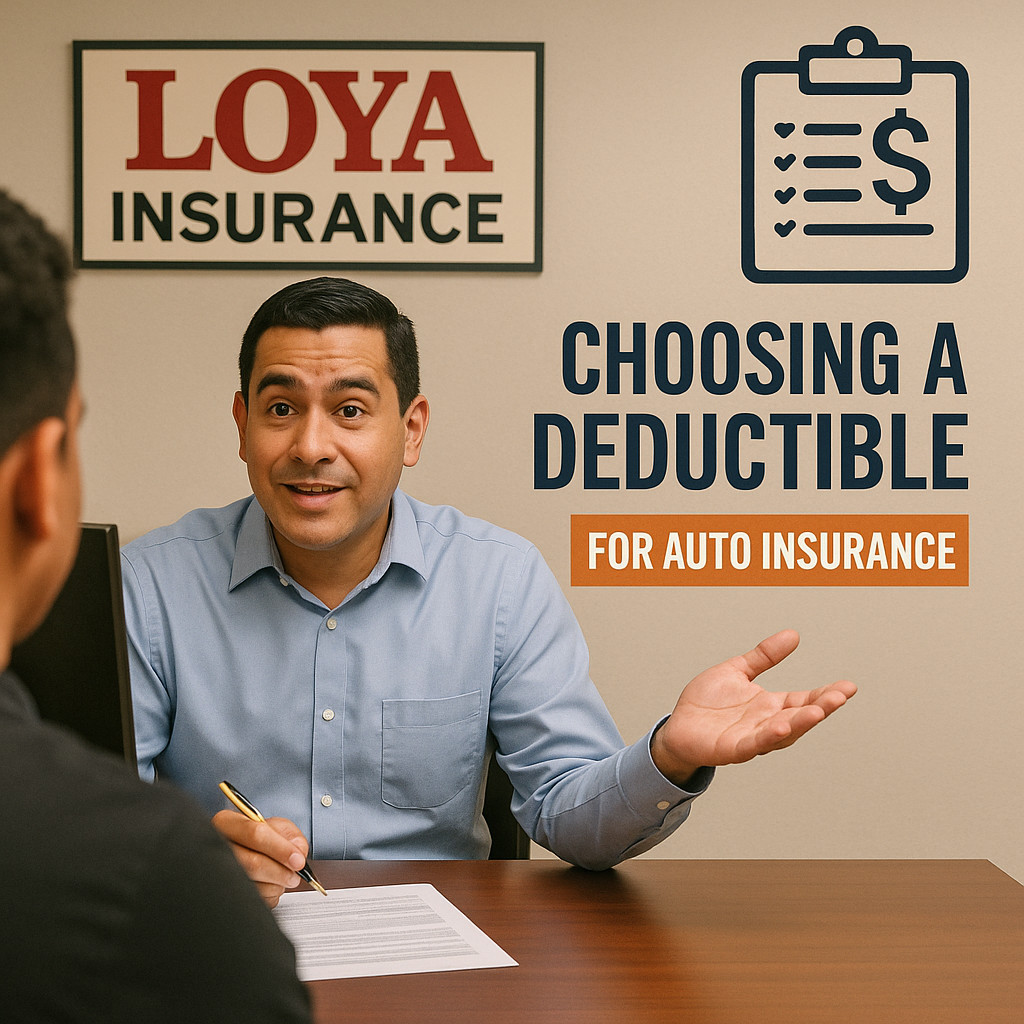
A deductible is the amount you pay out of pocket on a covered claim before your insurance contributes. In most auto policies, deductibles are tied to coverages that protect your vehicle—not the other driver’s vehicle or injuries.
Most commonly, deductibles apply to:
Typically, deductibles do not apply to: liability coverage (because it pays others), and many injury-related coverages like PIP or MedPay. However, details can vary by state and policy form, so the most reliable source is your declarations page and policy wording.
If you carry liability-only insurance, you usually won’t have a deductible for repairing your own vehicle—because there’s no coverage for your vehicle’s damage. That’s one reason some drivers with older cars choose liability-only: they avoid paying for collision/comprehensive (and the deductible that comes with it).
Deductible options depend on your state, driving history, vehicle, and underwriting rules. Availability can vary, but common deductible choices you may see include:
Many customers choose $500 or $1,000 because it can balance affordability and a manageable out-of-pocket cost. Drivers with more risk factors may see fewer deductible options or higher minimum deductibles depending on underwriting.
Deductibles and premiums usually move in opposite directions:
| If you choose… | What often happens to your premium | What often happens after a claim |
| Lower deductible (e.g., $250–$500) | Premium tends to be higher | You pay less out of pocket |
| Higher deductible (e.g., $1,000–$2,000) | Premium tends to be lower | You pay more out of pocket |
Instead of relying on a generic percentage savings claim, the best approach is to ask for a quote comparison using the same coverages with different deductibles. The difference can be modest or significant depending on your state, vehicle, and driving profile.
In most auto policies, deductibles primarily apply to collision and comprehensive. These coverages protect your vehicle in different situations:
Collision coverage usually applies when your car is damaged in a crash (whether you’re at fault or not) or when you hit an object. Examples include:
If you’re not at fault, the other driver’s liability insurance may pay. But if the other driver is uninsured, underinsured, or the claim is delayed, your collision coverage may be the fastest route to repairs—then your insurer may pursue reimbursement later (subrogation), which can vary by state and situation.
Comprehensive coverage generally applies to damage that is not caused by a collision, such as:
Some states and policies offer special glass coverage options, including reduced or $0 deductibles for certain windshield claims. Availability depends on your state and insurer, so confirm what your policy includes before assuming glass is “free.”
Collision and comprehensive deductibles can be different amounts. For example, you might choose $500 comprehensive and $1,000 collision.
Deductibles are applied to the portion of the claim your policy covers. How you pay can depend on how the claim is handled—sometimes you pay the body shop directly, and other times the deductible is subtracted from the insurer’s payment. The key is that the deductible is the part you’re responsible for either way.
Repair cost: $4,000
Your deductible: $500
Insurance pays (up to policy terms): $3,500
You pay: $500
Hail damage repair: $2,200
Your deductible: $1,000
Insurance pays: $1,200
You pay: $1,000
If your car is totaled, the insurer typically determines the vehicle’s actual cash value (ACV), then subtracts your deductible from the settlement (and may also account for any lienholder if the vehicle is financed).
Car value (ACV): $6,000
Your deductible: $1,000
Settlement before any loan payoff: $5,000
Even in a total loss, deductibles generally still apply—so it’s important to choose a deductible you can handle in a worst-case scenario, not just a minor repair.
Insurers price policies based on risk factors. Drivers with certain underwriting flags may see fewer deductible choices or higher minimum deductibles, which can be common in the non-standard market. Examples of factors that can affect options include:
This doesn’t mean you’re “stuck” forever. Over time, maintaining continuous coverage and improving your driving record can expand your options and lower costs.
If your vehicle is financed or leased, your lender may require full coverage (typically comprehensive + collision) and may set a maximum deductible. Many lenders commonly require a deductible of $500 or $1,000, but rules vary by lender and contract.
If your deductible exceeds your lender’s maximum, your declarations page may be rejected or your lender may place coverage on the vehicle (often called force-placed insurance), which can be significantly more expensive than arranging your own policy.
These are the most common deductible mistakes that create surprises later:

A practical way to choose a deductible is to start with a number you could pay today—without borrowing, skipping rent, or delaying medical care. Then confirm it fits any lender requirements, and only then compare premium differences.
| Deductible range | Often fits drivers who… | Keep in mind |
| $250–$500 | Want lower claim-time bills, drive frequently, or have a financed/newer vehicle | Higher premiums, but less financial shock after a claim |
| $1,000 | Want a middle ground and have some emergency cash available | Common choice; make sure you can truly pay it quickly |
| $1,500–$2,000 | Prioritize the lowest premium and can handle large out-of-pocket costs | One accident can become a major financial hit |
If you want to keep a manageable deductible but still reduce your premium, focus on levers that don’t increase your claim-time risk:
For more discount ideas, revisit these discount strategies and compare quotes using the same deductibles and coverage limits.
Do liability-only policies have a deductible?
Usually no, because liability coverage pays other people for damages you cause and does not cover repairs to your own vehicle. Deductibles most commonly apply to collision and comprehensive.
Can I have different deductibles for comprehensive and collision?
Often yes. Many policies allow different deductibles (for example, $500 comprehensive and $1,000 collision). Availability depends on state and insurer rules.
If I’m not at fault, do I still pay my deductible?
If the other driver’s insurer pays, you typically don’t pay your collision deductible. But if you use your own collision coverage to get repairs started quickly, the deductible may apply upfront and you may be reimbursed later through subrogation (varies by situation and state).
Can I change my deductible mid-policy?
Sometimes. Some insurers allow changes, while others restrict them or require underwriting review. The safest move is to confirm with your insurer and get the change in writing.
Your deductible affects your premium, your claim-time costs, and—if your vehicle is financed—whether your insurance meets lender requirements. The best deductible is the one that balances savings with a realistic plan for paying it quickly if something happens.
If you’re deciding between deductible options, ask for side-by-side quotes with the same coverages, then choose the deductible you can truly afford today. If you want a deeper look at saving money without sacrificing key protections, start with these discount opportunities.
Disclaimer: Coverage availability, deductibles, claim handling, and lender requirements vary by state, insurer, and policy. Always review your declarations page and policy documents, and confirm details with a licensed professional.