
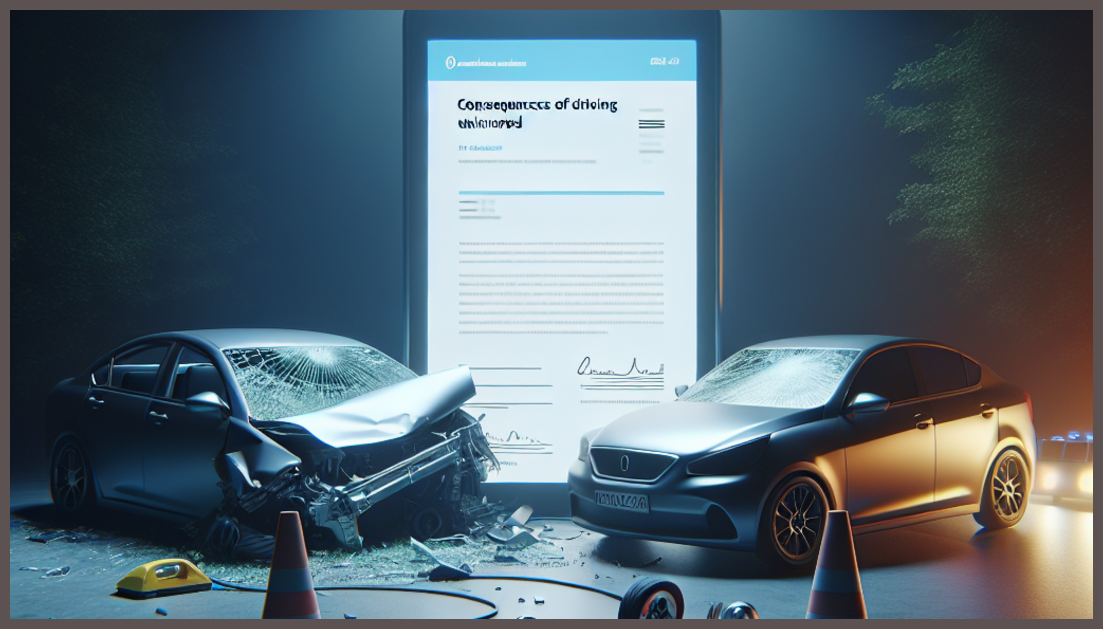
Driving without insurance is not just a small paperwork problem. It can trigger state penalties, license or registration trouble, SR-22 requirements, lawsuits, and major out-of-pocket costs if you cause a crash. In many cases, the “cheap” choice becomes the most expensive outcome.
Most states require drivers to maintain liability insurance or another form of financial responsibility. NAIC explains that auto insurance systems and required coverage vary by state, but liability coverage is the core protection used to pay for injuries or damage you cause to others [1].
If you are currently uninsured, the priority is to restore valid coverage before driving again. Compare your state requirements, liability limits, payment terms, fees, and total policy cost before choosing a policy.
Legal Penalties
You may face fines, reinstatement fees, registration suspension, license problems, or proof-of-insurance requirements depending on your state.
Personal Liability
If you cause a crash, you may be personally responsible for vehicle damage, medical bills, legal costs, and judgments.
Higher Future Costs
A lapse or uninsured-driving violation can push you into high-risk pricing when you try to buy insurance again.
Understanding the Legal Penalties for Uninsured Drivers
One of the most immediate consequences of driving uninsured is what can happen if you are pulled over or involved in a collision. Penalties vary by state, but they often include fines, fees, administrative actions, and proof-of-insurance requirements.
California DMV, for example, says insurance, also called financial responsibility, is required on vehicles operated or parked on California roads, and proof must be provided when requested by law enforcement, when renewing registration, or when involved in a traffic collision [2]. This is only one state example, but it shows how proof of insurance can be checked in ordinary driving situations.
| Possible Penalty | What It Means | Why It Can Cost More Later |
|---|---|---|
| Fine or citation | You may be ticketed for driving without required proof of insurance. | Fines and administrative fees can exceed the cost of starting basic coverage. |
| License or registration action | Your state may suspend driving privileges, registration, or both. | You may need reinstatement fees and proof of insurance to drive again. |
| SR-22 requirement | You may need proof of financial responsibility filed by an insurer. | SR-22 requirements can increase cost and require continuous coverage. |
| Vehicle impoundment | Some states or situations may lead to towing or impound fees. | Daily storage and release fees can add up quickly. |
Penalties depend heavily on state law. Drivers in California can review how driving uninsured can affect California motorists for a more specific look at insurance requirements, administrative consequences, and steps that may follow a coverage violation.
Financial Impact of Accidents Without Insurance
Legal penalties are only part of the problem. If you cause an accident while uninsured, you may be personally responsible for the other party’s property damage and injuries. That can include vehicle repairs, medical bills, rental car expenses, lost wages, and legal claims.
III reports that in 2024, the average auto liability property damage claim was $6,770, and the average bodily injury liability claim was $28,278 [3]. Those are averages, meaning serious crashes can cost much more.
| Scenario | If You Are Insured | If You Are Uninsured |
|---|---|---|
| Property damage to another vehicle | Handled up to your liability limits, subject to policy terms. | You may owe the full cost out of pocket. |
| Injuries to other people | Bodily injury liability can pay covered losses up to your limits. | You may be personally responsible for medical bills and legal claims. |
| Legal defense | Often included with liability coverage for covered claims. | You may need to pay your own attorney and court costs. |
| Future premiums | Rates can increase after an at-fault claim. | A lapse or uninsured violation can create high-risk pricing later. |
The financial exposure can extend well beyond the initial repair bill. Medical expenses, lost income, legal costs, vehicle damage, and a judgment can place substantially more pressure on a household than the short-term savings from going without coverage.
Why Future Insurance Can Become More Expensive
The consequences do not end when the ticket is paid. A coverage lapse or uninsured-driving violation can make insurers view you as higher risk. That can mean higher premiums, stricter payment terms, higher down payments, fewer carrier options, or an SR-22 filing requirement.
Lapse History
Insurers often consider prior insurance history. A gap in coverage can make future quotes less favorable.
High-Risk Category
After major violations, some drivers need non-standard or high-risk insurance options.
Payment Restrictions
Some drivers may face larger down payments or fewer installment options after a lapse.
A lapse or uninsured-driving violation can also reduce the number of standard-market options available to you. Comparing auto insurance providers for higher-risk drivers can help you evaluate pricing, coverage, payment requirements, and eligibility without relying on the first quote you receive.
The Burden of Legal Fees and Court Costs
Legal fees are another overlooked cost. Liability insurance typically provides claim handling and legal defense for covered claims. Without insurance, you may have to pay attorney fees, court costs, settlements, or judgments yourself.
Possible Legal Costs
- Attorney retainers and hourly fees.
- Court filing and administrative costs.
- Settlement payments.
- Civil judgments.
- Collection issues if you cannot pay.
Why Liability Helps
- Can pay covered property damage.
- Can pay covered injury claims.
- May include legal defense for covered claims.
- Helps meet state financial responsibility rules.
- Reduces the chance of facing a claim alone.
Liability protection is easier to evaluate when every quote uses the same limits. Comparing auto liability insurance quotes with equivalent coverage can help you separate real pricing differences from quotes that simply reduce the amount of protection.
Uninsured Motorist Risk Also Affects Insured Drivers
Uninsured driving does not only affect the person without insurance. It also affects insured drivers who are hit by someone who cannot pay. III reports that 15.4% of motorists were uninsured in 2023, or more than one in seven drivers [4].
That is why many drivers compare uninsured and underinsured motorist coverage. UM/UIM can help when another driver has no insurance or not enough insurance, depending on your state and policy terms.
UM Coverage
May help if an uninsured driver hits you or if a hit-and-run claim qualifies under your policy.
UIM Coverage
May help when the at-fault driver has insurance, but their limits are too low.
UMPD
May help with vehicle damage from an uninsured driver where available.
Drivers who already carry insurance should check the declarations page to confirm whether UM, UIM, and uninsured motorist property damage are included, what limits apply, and how those coverages coordinate with collision or other protection.
How to Avoid the Financial Impact of Driving Uninsured
If coverage feels expensive, the safest move is to compare legal options rather than canceling your policy. Many drivers can lower costs by changing deductibles, comparing carriers, asking about discounts, and choosing coverage that fits the vehicle’s value.
- Compare at least 3–5 quotes using the same coverage limits.
- Ask about monthly payment plans if upfront cost is the issue.
- Review liability-only coverage if your vehicle is older and paid off.
- Ask about safe driver, paperless, multi-car, and defensive driving discounts.
- Do not let coverage lapse without checking state consequences first.
If affordability is the reason you are considering going without insurance, comparing affordable auto insurance providers without weakening essential coverage can help you look for a lower total cost while keeping the protection required for your situation.
FAQs: Driving Without Insurance
Can I legally drive without insurance if I rarely use my car?
In most states, you need required insurance or financial responsibility if the vehicle is registered and driven on public roads. Rare driving does not automatically remove the requirement.
What happens if I am not at fault but I do not have insurance?
You may still face penalties for being uninsured. Some states also limit what uninsured drivers can recover in certain situations.
How long does an uninsured driving violation stay on my record?
It varies by state. The violation may affect licensing and insurance pricing for years, so check with your DMV or insurance department.
Is basic liability insurance enough?
Basic liability may satisfy minimum legal requirements, but minimum limits can be too low after a serious crash. Compare higher limits when possible.
Conclusion
The impact of driving uninsured can be immediate and long-lasting. From fines and suspensions to legal fees, lawsuits, and higher future premiums, the risks often outweigh the short-term savings of going without coverage.
If you are uninsured or unsure whether your coverage is adequate, review your options now. Comparing quotes, confirming state requirements, and speaking with a licensed professional can help you secure protection that fits your needs and budget.
References
- NAIC, auto insurance consumer information and basic coverage systems. Source↩
- California DMV, insurance requirements and financial responsibility proof. Source↩
- Insurance Information Institute, auto insurance liability claim averages. Source↩
- Insurance Information Institute, uninsured motorists statistics. Source↩