
There is a common misconception that car insurance is only for people who own cars. In reality, many drivers regularly use vehicles they do not own, such as rental cars, borrowed cars, or employer vehicles in limited situations. A standard auto policy usually insures a specific vehicle, but non-owner insurance is designed to provide liability-focused protection for a driver who does not own a car.
NAIC explains that liability insurance helps pay medical expenses and property damage caused to another person when the insured driver is negligent [1]. That liability focus is the main reason non-owner insurance can be useful for occasional drivers who want protection without insuring a specific vehicle.
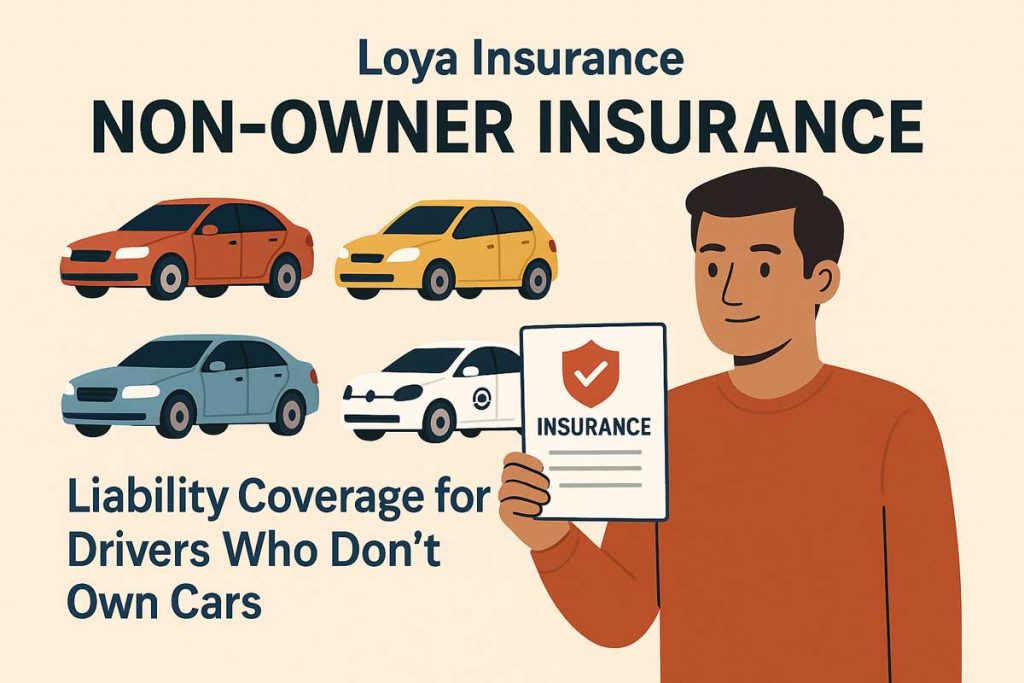
Drivers who do not own a car but occasionally borrow or rent vehicles.
Liability protection for injuries or property damage you cause to others.
Collision and comprehensive coverage for the vehicle you are driving.
May help drivers meet SR-22 requirements without owning a vehicle.
Important: Coverage rules, eligibility requirements, and what is allowed can vary by state, insurer, and policy language. If you are unsure whether you qualify, especially with SR-22 requirements, household vehicles, regular access to a car, or rental use, confirm details with a licensed insurance representative before purchasing.
Understanding What Non-Owner Insurance Actually Is
A non-owner policy is different from what most people think of as auto insurance. Instead of insuring a specific car with a VIN, mileage assumptions, and physical damage options, the policy is usually built around covering you as a driver when you occasionally operate vehicles you do not own.
The main focus is typically liability. In practical terms, that means a non-owner policy may help pay for injuries or property damage you cause to others while driving a covered borrowed or rented vehicle, up to your policy limits and subject to state rules.
It Follows the Driver
Non-owner coverage is usually built around you as the driver, not around one specific vehicle.
It Is Liability-Focused
The core coverage usually helps protect you if you cause injury or property damage to others.
It Has Limits
It normally does not repair the borrowed or rented vehicle you are driving after a crash.
Some states or insurers may allow add-ons such as uninsured/underinsured motorist coverage, medical payments, or personal injury protection. Availability varies, so do not assume those options are included unless they are listed on your declarations page.
Who Needs Loya Non-Owner Insurance?
Not everyone needs a non-owner policy. It is usually meant for people who drive sometimes but do not own a vehicle. It is not meant to replace a standard policy if you own a car, have a car registered in your name, or regularly use the same household vehicle.
Good Fit Situations
- You do not own a car but borrow one occasionally.
- You rent cars often and want extra liability protection.
- You need an SR-22 but do not own a vehicle.
- You want to avoid a long gap in insurance history.
- You sometimes drive an employer vehicle and need to understand your personal exposure.
Usually Not a Fit
- You own a car.
- A vehicle is registered in your name.
- You regularly drive the same car.
- You live with someone whose car you use daily.
- You drive for rideshare, delivery, courier, or business use without proper commercial coverage.
You Don’t Own a Car but Still Drive Occasionally
If you borrow a friend’s car on weekends, occasionally drive a parent’s vehicle, or only drive from time to time, a non-owner policy can provide liability protection when you are behind the wheel. The vehicle owner still needs their own insurance, and how coverage applies can depend on the owner’s policy, your policy, state rules, and claim facts.
The practical rule is simple: non-owner insurance is usually designed for occasional driving, not regular daily access to one vehicle. If the car belongs to a parent, whether a regular driver should be listed on the parent’s policy can become important when that vehicle is used frequently.
You Rent Cars Often
Rental companies often offer coverage options at the counter. The Insurance Information Institute explains that non-car owners who frequently rent may consider a non-owner liability policy for additional liability protection when renting or borrowing cars [2].
You’re Required to Carry an SR-22
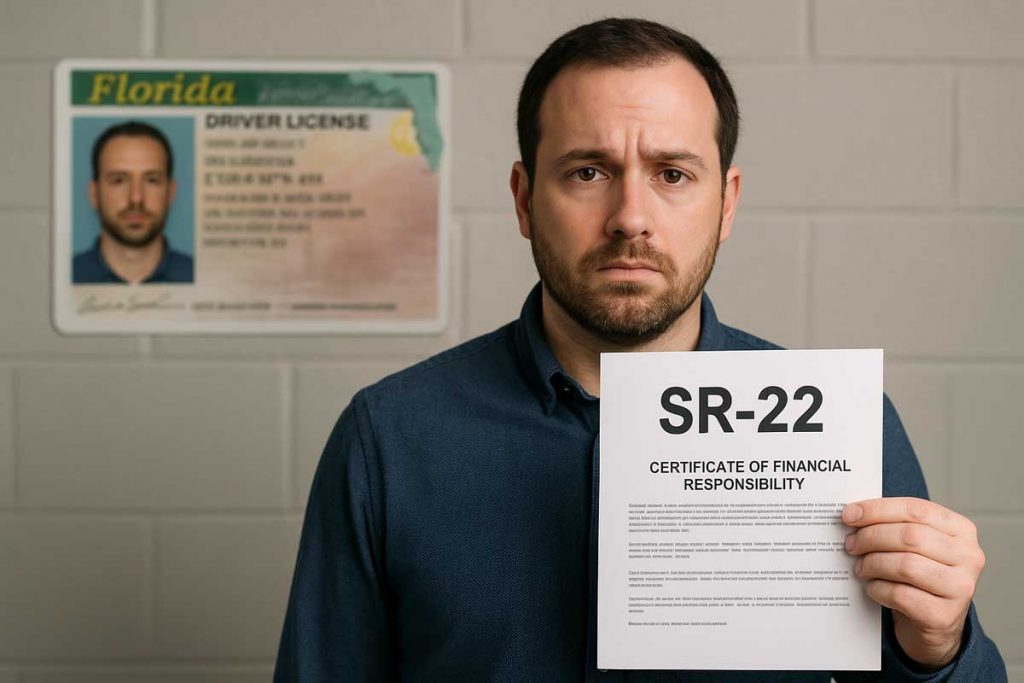
One of the most common reasons drivers ask about non-owner insurance is an SR-22 requirement. An SR-22 is not a separate type of insurance; it is usually a certificate or filing that proves you carry the required liability insurance. Progressive explains that drivers may be able to meet SR-22 requirements without owning a car by purchasing a non-owner policy [3].
If you need this filing, the key is to keep coverage active. Missing payments or allowing the policy to lapse can create serious problems because the insurer may notify the state that the SR-22 is no longer active.
How a Non-Owner Policy Typically Works
Because the policy is built around the driver rather than a specific vehicle, the process can be simpler than a standard auto policy. However, underwriting still matters. Your driving record, insurance history, state, limits, and SR-22 requirement can all affect whether coverage is available and how much it costs.
- You request a non-owner quote. You usually confirm that you do not own a vehicle and need coverage for occasional driving.
- You provide driver information. Your record, prior coverage, license status, and SR-22 needs can affect eligibility and price.
- You choose liability limits. State minimums may be available, but higher limits can provide better protection after a serious accident.
- The SR-22 is filed if required. The insurer may file it with the state, often electronically.
- You keep the policy active. Continuous coverage is especially important if your license status depends on an SR-22 filing.
What Non-Owner Insurance Typically Covers
Most non-owner policies center on liability coverage. If you cause an accident while driving a covered borrowed or rented vehicle, liability coverage may help pay for the other party’s covered injuries or property damage, up to your policy limits.
| Coverage Type | What It May Help Pay For | Important Limitation |
|---|---|---|
| Bodily Injury Liability | Medical bills, lost wages, legal damages, or related covered injury costs for other people if you cause a crash. | Only up to your policy limits and subject to state law. |
| Property Damage Liability | Damage you cause to another vehicle, fence, building, gate, or other property. | Does not repair the car you are driving. |
| UM/UIM, MedPay, or PIP | May be available in some states or through some insurers. | Do not assume these are included unless shown on your policy. |
Because non-owner policies are usually liability-focused, the way different insurers structure liability-only coverage can affect available limits, exclusions, and pricing even when the basic purpose of the policy is similar.
What Non-Owner Insurance Usually Does Not Cover
Non-owner insurance is intentionally limited. Unlike a standard auto policy built around a specific vehicle and its coverages, it usually does not include collision or comprehensive protection for the borrowed or rented car.
No Collision for the Car
If you crash the borrowed or rented vehicle, non-owner insurance usually does not pay to repair that vehicle.
No Comprehensive
Theft, vandalism, hail, fire, flood, and animal damage to the vehicle are usually not covered by a non-owner policy.
No Regular-Use Loophole
If you regularly drive the same vehicle, the insurer may require you to be listed on that car’s policy instead.
- Damage to the car you are driving.
- Comprehensive losses to the vehicle, such as theft or weather damage.
- A vehicle you own or that is registered in your name.
- A vehicle you have regular access to.
- Personal belongings inside the car, such as phones or laptops.
- Business, rideshare, delivery, or courier use unless specifically covered.
When Non-Owner Insurance May Not Be Allowed
Many insurers restrict non-owner policies to occasional-driver situations. If you own a vehicle, have one registered in your name, or regularly use a household vehicle, a non-owner policy may not be the right fit.
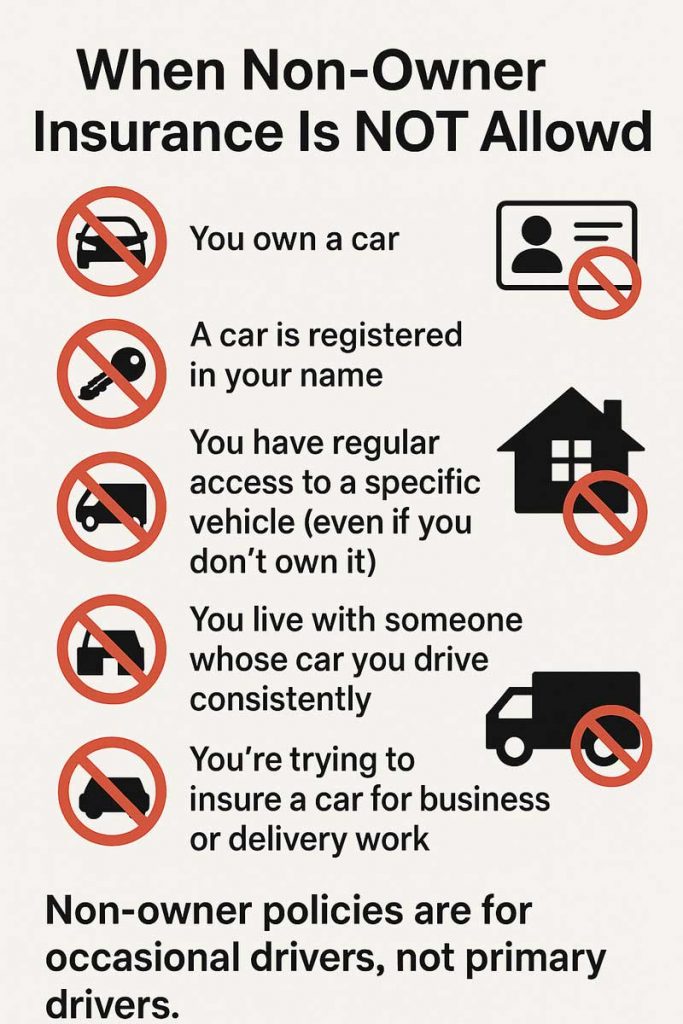
The safest approach is to be honest about how often you drive and which vehicle you use. If your real driving situation does not match the policy, a claim could become complicated or coverage could be affected.
The Cost of Non-Owner Auto Insurance
Non-owner insurance is often cheaper than a standard owner policy because it usually does not include collision or comprehensive coverage for a vehicle. Still, the cost can vary significantly based on your state, record, insurance history, limits, and SR-22 requirement.
| Pricing Factor | Why It Matters | What to Compare |
|---|---|---|
| SR-22 Requirement | Often signals higher risk and requires continuous proof of liability coverage. | Ask whether the quote includes filing fees and state-specific requirements. |
| Driving Record | Tickets, accidents, DUI, reckless driving, and suspensions can raise rates. | Compare quotes after violations age off your record. |
| Liability Limits | Higher limits usually cost more but can provide stronger financial protection. | Compare state minimums against higher limits like 50/100 or 100/300 where available. |
| Coverage History | Gaps in coverage may affect future pricing. | Ask whether maintaining non-owner coverage can help avoid a lapse. |
| State Rules | Minimum requirements and available coverages vary by state. | Confirm what applies where you live. |
Getting an SR-22 With a Non-Owner Policy
If you have been ordered to carry an SR-22 but do not currently own a car, a non-owner SR-22 policy can be a practical way to meet the requirement. It allows you to maintain liability coverage in your name without insuring a vehicle you do not own.
How It Usually Works
- A non-owner liability policy is issued in your name.
- The SR-22 filing is attached if required.
- The insurer files proof with the state.
- You keep the policy active for the required period.
Why Lapses Matter
If the policy cancels, the insurer may notify the state. That can trigger license problems, reinstatement delays, or new penalties depending on your state’s rules.
If you later buy a vehicle, the point at which insurance needs to be in place during the purchase becomes important. You may need to switch from non-owner coverage to a standard owner policy while keeping any required SR-22 filing active.
Benefits of Non-Owner Insurance
For the right driver, non-owner insurance can be useful, affordable, and practical. The key is using it for the correct situation: occasional driving without vehicle ownership.
It Can Be Affordable
Because it usually focuses on liability and does not insure a vehicle for physical damage, it may cost less than a full owner policy.
It Can Help Avoid Gaps
Maintaining coverage may help you avoid a long lapse when you later transition into a standard auto policy.
It Can Support SR-22 Compliance
If you need an SR-22 but do not own a car, non-owner coverage may help you meet state filing requirements.
When You Should Upgrade to a Full Auto Policy
Non-owner insurance is often a temporary or limited-use solution. If your driving changes to regular business use, coverage designed for vehicles used for commercial purposes may be more appropriate than a personal non-owner policy.
- You buy a vehicle.
- You start driving the same vehicle regularly.
- You move in with someone whose car you will use frequently.
- You need collision or comprehensive coverage for a specific vehicle.
- You begin rideshare, delivery, courier, or business driving.
Frequently Asked Questions About Non-Owner Insurance
Is non-owner insurance available in every state?
Availability depends on the state and insurer. A licensed representative can confirm whether non-owner coverage and SR-22 filings are available where you live.
Can I add comprehensive or collision?
Usually no. Non-owner policies typically do not insure a specific vehicle for physical damage.
Can it help me rent cars?
It may provide liability protection, but it usually does not cover damage to the rental car itself.
What if I live with someone who owns a car?
If you drive that car regularly, you may need to be listed on the vehicle owner’s policy instead of using a non-owner policy.
The Final Word on Loya Non-Owner Car Insurance
Non-owner insurance is one of the most useful but misunderstood insurance products. It can provide liability-focused protection for people who do not own a vehicle but still drive occasionally, and it can be especially helpful for drivers who need an SR-22 without owning a car.
The key is to use this coverage correctly. It is not a replacement for a standard policy if you own a vehicle, regularly use a specific car, or need collision and comprehensive protection. Review your driving situation honestly, compare available limits, and update your policy as soon as your circumstances change.